
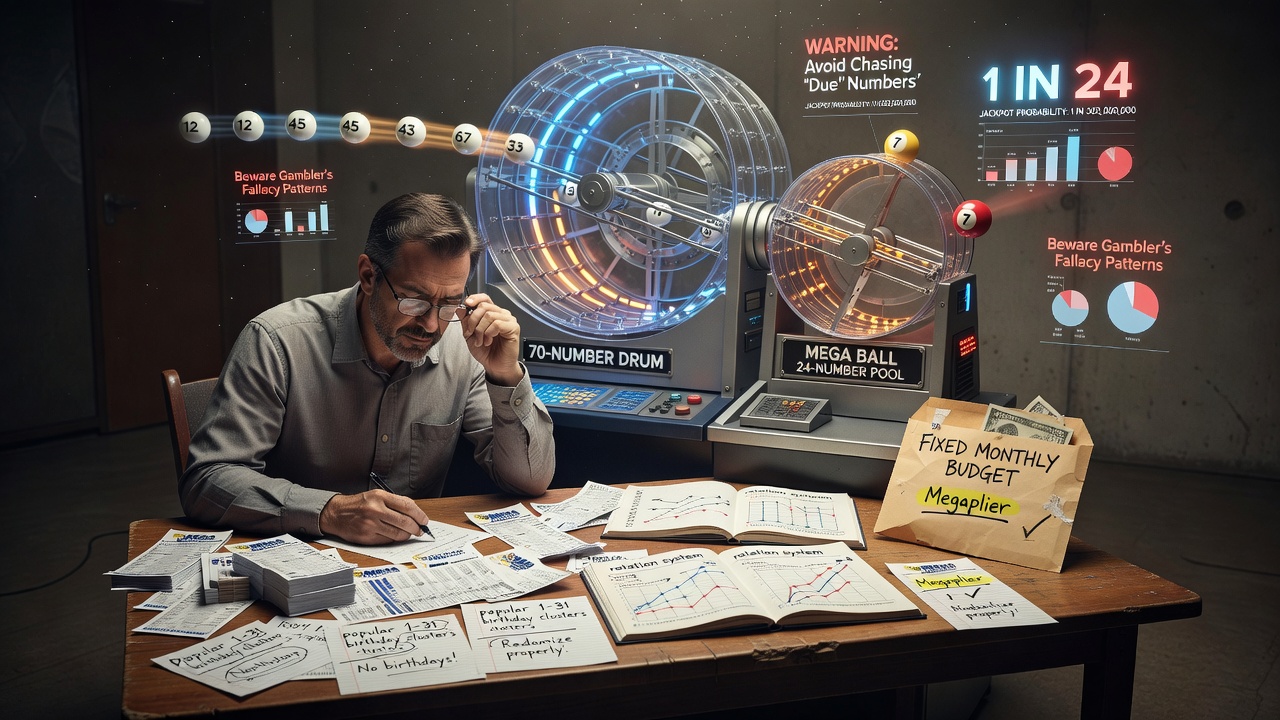
One number decides more than the other five combined. In Mega Millions, the Mega Ball is drawn from a separate pool of 24 numbers, completely independent of the five white balls that come from a field of 70. That structural detail changes how a player should think about the game, yet most people treat the Mega Ball as an afterthought - a random pick tacked on at the end of the slip. It isn't an afterthought. It's the single digit that separates a modest match-five prize from the jackpot itself.
Every draw resets the odds, and no formula bends them in your favor. Still, understanding how the numbers behave, how prize tiers are structured, and how other players tend to pick their combinations can shape smarter decisions at the counter. Some players who enjoy the mechanics of number-based games also explore other formats to sharpen their instincts - for instance, testing a mega ball strategy on platforms built around similar draw logic can help you understand probability distribution in a lower-stakes environment before applying that thinking to the real lottery. This piece breaks down the mechanics, the math, and the practical habits that separate casual play from informed play.
What follows isn't a promise of guaranteed wins. It's a clear-eyed look at Mega Millions strategy - the odds you're actually facing, the selection methods that hold up under scrutiny, and the ones that don't.
Understanding How the Mega Ball Works
The Two-Pool System Explained
Mega Millions draws five white balls from a drum containing 70 numbers, then draws one Mega Ball from a separate drum containing 24 numbers. Because the pools never mix, the Mega Ball has zero relationship to the white balls in terms of probability. A player who matches all five white balls but misses the Mega Ball wins a fixed secondary prize, often $1 million. Add the correct Mega Ball, and that same ticket becomes the jackpot winner. This separation is why the Mega Ball deserves its own line of thinking rather than being folded into general number selection.
Why the Mega Ball Carries Outsized Weight
With only 24 numbers in its pool, the Mega Ball has far better individual odds than any single white ball. That smaller field is exactly why it functions as the jackpot trigger - it's the tightest bottleneck in the entire game. Multiply the odds of matching five white balls by the odds of matching the Mega Ball, and you get the full jackpot probability, a number far steeper than either component alone.
How the Multiplier Feature Interacts With It
The optional Megaplier add-on increases non-jackpot prizes but has no bearing on the Mega Ball's odds or its role in the jackpot. Players sometimes confuse the multiplier with a strategy tool that improves selection odds; it doesn't. It only affects payout size on lower tiers.
Mega Ball Odds and Strategy: What the Numbers Really Say
Breaking Down the Actual Probability
The odds of matching the Mega Ball alone are 1 in 24 per draw. Combined with matching all five white balls, the jackpot odds land at roughly 1 in 302 million. No selection method changes that math - every number in the Mega Ball pool has an equal, independent chance every single drawing. Mega Ball odds and strategy discussions often get muddled here: strategy can influence prize-sharing outcomes and ticket efficiency, but it cannot alter the fixed probability of any given number appearing.
Why Past Draws Don't Predict Future Ones
Each drawing is an independent event. The machine doesn't remember which Mega Ball came up last week, last month, or last year. Number 7 has exactly the same 1-in-24 chance whether it was just drawn or hasn't appeared in six months. Believing otherwise is a common misstep known as the gambler's fallacy, and it leads players to over-invest emotional confidence in patterns that don't exist mechanically.
What Frequency Charts Can and Cannot Tell You
Frequency charts showing which Mega Ball numbers have appeared most often over the past several years are widely available and genuinely interesting to review. They tell you history - they don't tell you what happens next. Over a long enough sample, every number regresses toward roughly equal representation. Short-term streaks are noise, not signal.
Mega Ball Number Selection: Methods Players Actually Use
Random Quick Picks Versus Manual Selection
Roughly 70 to 80 percent of Mega Millions tickets sold use Quick Pick, the computer-generated random selection. Statistically, Quick Pick performs identically to manual selection because every number combination carries the same odds. The real difference lies in prize-splitting: manually chosen numbers, especially birthdays and anniversaries, cluster heavily in the 1-31 range, meaning more players unconsciously pick the same combinations. If you win with a heavily duplicated combination, you're more likely to split the jackpot.
Balancing High and Low Numbers
Since the Mega Ball pool runs 1 through 24, some players deliberately choose numbers above 24 for their white-ball picks and reserve genuine variety for the Mega Ball itself. This doesn't improve odds, but it does reduce the chance of overlapping with popular birthday-based picks, which stop at 31 for the white balls and don't apply at all to the Mega Ball's separate range.
Building a Rotation System
Some players maintain a rotating shortlist of Mega Ball numbers, cycling through them across multiple draws rather than picking fresh each time. This has no mathematical advantage over random selection, but it does bring a sense of structure and discipline to spending, which matters more than the illusion of improved odds.
- Quick Pick removes emotional bias but doesn't beat manual selection mathematically
- Numbers above 31 reduce the risk of shared jackpots from birthday-based picks
- Rotation systems help with budget discipline, not probability
- Every Mega Ball number, 1 through 24, holds identical long-term odds
Winning Mega Ball Tips for Smarter Play
Set a Fixed Budget Before You Play
The single most reliable piece of winning Mega Ball tips advice has nothing to do with number selection - it's about spending control. Decide on a fixed amount per month and treat it as entertainment spending, not investment. Lottery mathematics guarantees the house edge; no strategy overcomes that structurally.
Avoid Popular Combinations to Reduce Jackpot Splitting
Because so many players gravitate toward dates, patterns, and sequences, avoiding those clusters doesn't raise your odds of winning but does raise your potential payout if you do win. This is one of the few genuinely actionable pieces of Mega Ball strategy grounded in real player behavior data rather than superstition.
Track Draws Without Overreacting to Streaks
Keeping a simple log of past Mega Ball results is a reasonable habit for engaged players, provided it's used for interest rather than false prediction. Treat it as a record, not a crystal ball.
Common Mistakes That Undermine a Mega Millions Strategy
Chasing "Due" Numbers
The belief that a number is "due" because it hasn't appeared recently misunderstands independent probability entirely. Every draw starts fresh. This mistake alone accounts for a large share of misguided number selection among casual players.
Overspending to "Guarantee" a Combination
Buying dozens of tickets to cover every Mega Ball number might feel like a systematic approach, but the cost almost always outweighs the marginal odds improvement, especially against jackpot odds measured in the hundreds of millions.
Ignoring the Overall Mega Millions Strategy Beyond the Mega Ball
Focusing exclusively on the Mega Ball while neglecting sound white-ball selection habits - like avoiding all-consecutive numbers or all-single-digit combinations - creates an incomplete approach. A sound strategy treats both pools with equal analytical care, even though only one dictates the jackpot trigger.
Putting It All Together: A Practical Framework
Combine Discipline With Realistic Expectations
The strongest approach blends budget discipline, awareness of odds, and selection habits that reduce shared-prize risk without pretending to beat fixed probability. That combination is the closest thing to a defensible Mega Ball strategy that exists.
Reassess Periodically, Not Emotionally
Revisit your number choices and spending habits every few months rather than after every draw. Emotional decisions made right after a near-miss tend to push players toward riskier, less rational choices.
Frequently Asked Questions
Can any number selection method improve my odds of matching the Mega Ball?
No method changes the fixed 1-in-24 odds for any individual Mega Ball number. Selection strategies affect ticket cost efficiency and jackpot-sharing risk, not the underlying probability of a match.
Is it better to play the same Mega Ball number every draw or switch numbers?
Neither approach changes your odds since each draw is independent. Consistency can help with budgeting and record-keeping, but it offers no mathematical edge over switching numbers randomly each time.
Does buying more tickets meaningfully increase my chances of winning the jackpot?
Buying more tickets does increase your odds proportionally, but the increase is often negligible against odds near 1 in 302 million. Ten tickets instead of one barely moves the needle while multiplying your cost tenfold.
Why do some players avoid numbers above 31 for the white balls but not the Mega Ball?
Numbers 1 through 31 overlap with common birthdate picks, so avoiding that range for white balls reduces the chance of splitting a jackpot with other winners. The Mega Ball pool tops out at 24, so this birthday-avoidance logic doesn't apply to it in the same way.
Are frequency charts of past Mega Ball numbers useful for future predictions?
They're useful for historical interest but not for prediction. Past frequency has no bearing on future draws because each drawing is a fully independent event with equal odds for every number.
What's the most practical piece of advice for someone new to Mega Millions?
Set a strict, small budget before buying tickets and treat the purchase purely as entertainment. Understanding the odds honestly prevents the common mistake of chasing losses or overspending based on false patterns.