
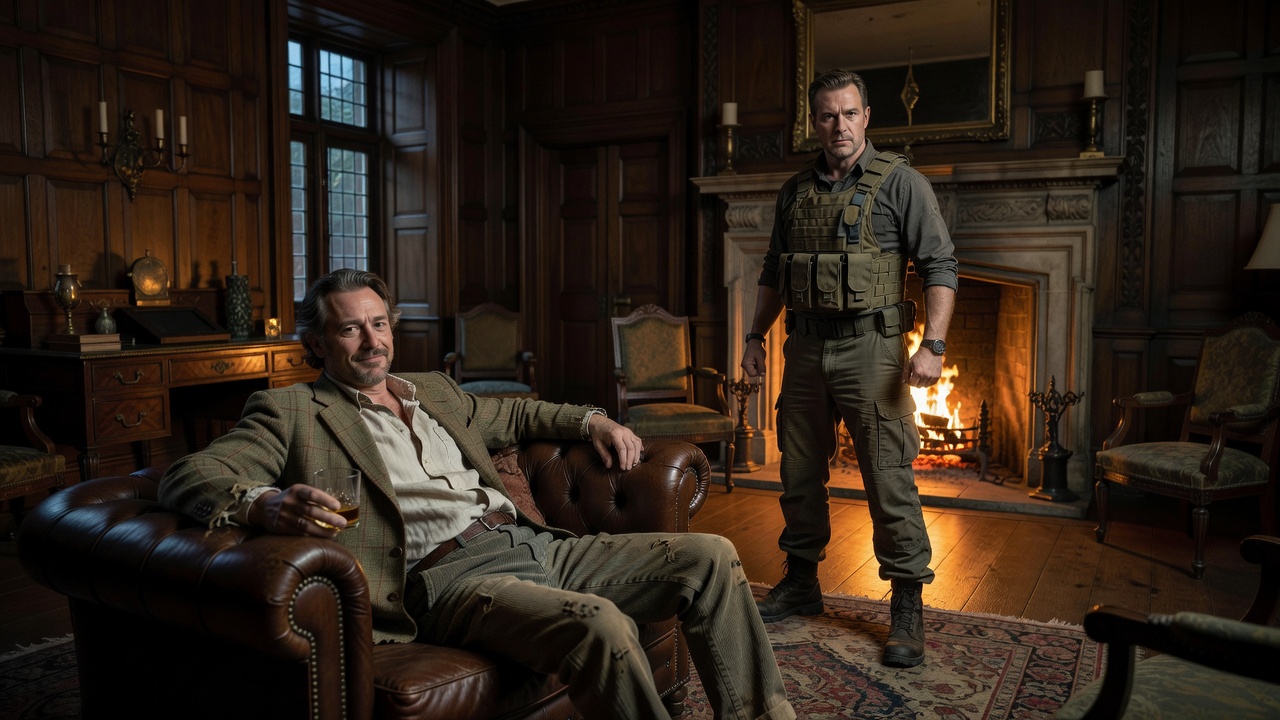
Autumn's television schedule has delivered its usual bounty of competitive formats, and among the crop, Celebrity Traitors has settled into its now-familiar groove of psychological gamesmanship dressed up as a country-house parlour game. But with the early episodes moving at a measured pace, attention has drifted toward something less discussed than the murders and banishments: what the cast is wearing, and what it signals about each contestant's approach to the game and to public life more broadly.
Costume as Character Study
Reality formats built around sustained close observation - Big Brother, I'm a Celebrity, The Traitors - have always doubled as unintentional style documentaries. Contestants arrive with wardrobes chosen weeks in advance, often with professional stylists involved, and those choices get amplified across dozens of hours of broadcast and thousands of screenshots circulated online. The result is a kind of unplanned transparency. A pop star's meticulously coordinated furs and sharp tailoring tell a different story than a stand-up comedian's rotation of gilets and hiking shoes, and viewers read both as data points about authenticity, effort and self-presentation.
This matters beyond idle commentary. Television formats increasingly function as extended advertising vehicles, whether contestants intend it or not. A distinctive look worn repeatedly on a prime-time show tends to generate searches, sales spikes and media coverage long after the episode airs, which is partly why stylists are now a standard part of the production ecosystem around competitive reality television.
Why the Public Cares About the Small Details
Shows like Celebrity Traitors thrive on scrutiny. Viewers are invited to play detective, parsing body language, alliances and now, evidently, outerwear, for clues about who is lying and who is telling the truth. That culture of close reading extends naturally to clothing, because in a format where almost nothing is accidental, audiences assume wardrobe choices carry intention too - whether that's Richard E Grant's shambolic tweed signalling old-money ease, or Ross Kemp's combat-ready layers suggesting he's taking the premise rather more literally than the producers intended.
The commentary also reflects a broader shift in how audiences consume event television: not passively, but as participants generating their own running commentary across social platforms, often in real time. The costumes become shorthand for personality, and personality becomes the real currency of the show, arguably more than the whodunnit mechanics themselves.
A Format Built on Spectacle and Scrutiny
The Traitors' enduring appeal lies in its blend of transparent artifice and genuine tension. Everyone knows it's a game, yet the stakes feel real because the social dynamics are unscripted. That tension extends to the visual presentation of its cast, where the gap between "styled within an inch of their lives" and "just rocking up" becomes its own subplot. For a television industry increasingly reliant on formats that generate conversation well beyond broadcast slots, that kind of incidental, unmonetised engagement - people debating a celebrity's cravat rather than the murder plot - is arguably as valuable as the ratings themselves.