
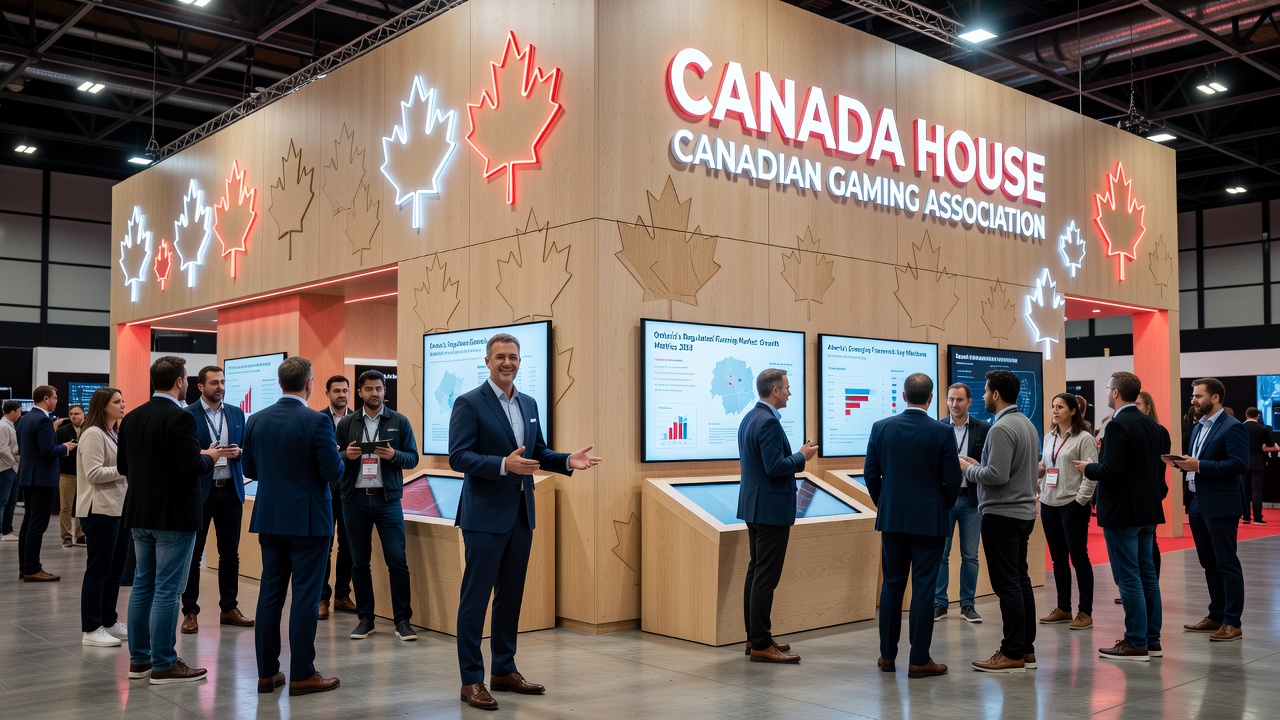
The Canadian Gaming Association is establishing a permanent presence at ICE Barcelona, known as Canada House, designed to give international operators, suppliers and regulators a single point of contact for understanding Canada's gaming landscape. The initiative arrives as Canada's provincial and territorial markets continue to diverge in how they regulate online gambling, making a coordinated showcase more useful than ever for visitors trying to make sense of the country's patchwork regulatory map.
Why Canada Needs a Collective Presence
Canada does not have a single national framework for online gambling. Regulation is handled province by province, which means companies entering the market face different licensing regimes, tax structures and compliance expectations depending on where they operate. Ontario has run a regulated iGaming market for several years, while Alberta has moved to establish its own framework. For an international visitor at a trade show, this complexity can be difficult to parse in a few hours walking a show floor. Canada House is meant to solve that problem by bringing jurisdictions, operators and suppliers together under one roof, offering a condensed but substantive introduction to how the Canadian market actually functions.
What Paul Burns Says the Space Is Meant to Achieve
Paul Burns, President and CEO of the Canadian Gaming Association, has framed Canada House as a deliberate response to the scale of ICE Barcelona itself. The event draws operators, suppliers, regulators and investors from around the world, and Burns has described it as the natural venue for reaching those audiences at scale. His stated goal is straightforward: encourage new relationships, prompt serious conversations about doing business in Canada, and leave visitors with a clearer sense of the country as a market with a competitive currency position, an experienced workforce and a regulatory environment that, in his telling, has moved in a progressive direction. These are claims made by an industry advocate promoting his market, and should be read in that context rather than as independent market analysis.
The Broader Significance for ICE Barcelona and the Industry
Margaret Dunn, the Portfolio Director responsible for ICE Barcelona, has linked the creation of Canada House directly to Alberta's move toward a regulated iGaming market. Her comments point to a wider pattern in the gambling industry: as individual jurisdictions open or reform their markets, trade events respond by creating dedicated spaces that help newly regulated regions attract international attention and investment. This is not unique to Canada - national and regional pavilions are a recurring feature of major gaming expos, reflecting how fragmented licensing globally has become and how much value operators place on understanding local rules before committing resources.
What This Means for Operators and Consumers
For operators and suppliers, initiatives like Canada House lower the cost of initial market research, but they do not replace the work of engaging directly with provincial regulators, understanding licensing obligations, or assessing compliance costs specific to each jurisdiction. For consumers, the expansion of regulated gambling markets in Canada carries the usual trade-offs associated with legalization: clearer consumer protections and oversight on one hand, alongside the need for continued vigilance around responsible gambling tools, advertising standards and player safeguards as more operators enter a growing regulated space. Market growth driven by new regulatory openings should be read as a business and policy development, not as an invitation to treat gambling as a reliable source of income.