
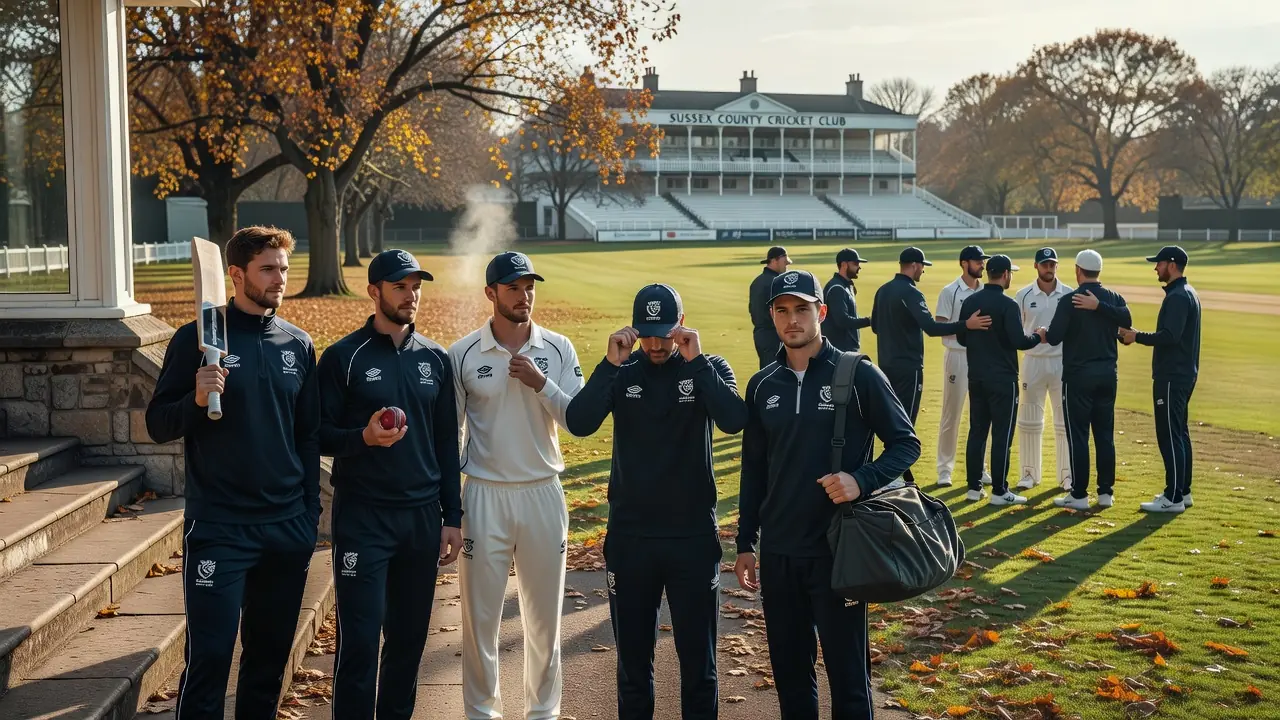
Sussex Cricket has confirmed that five players will leave the club once the 2026 season concludes: overseas batter Daniel Hughes, seam bowler Brad Currie, top-order T20 specialist Harrison Ward, spinner Troy Henry and young seamer Nantes Oosthuizen. Their exits form part of a wider list of ten departures from Hove, alongside previously announced moves involving Henry Crocombe, Fynn Hudson-Prentice, John Simpson, George Thomas and Tom Alsop.
A significant turnover in the Hove dressing room
Squad rebuilding of this scale is routine in professional cricket, where contracts typically run on short cycles and clubs must balance overseas quotas, pathway development and salary budgets each winter. For Sussex, the departures touch every format and every stage of a player's career, from an experienced overseas run-scorer to academy graduates still establishing themselves in senior cricket. Hughes arrived in 2024 and became a central figure in both red-ball and white-ball cricket, contributing to promotion in the County Championship and a Finals Day appearance in the Vitality Blast. His near-2000 first-class runs at an average above 43, alongside a maiden List A and T20 influence, illustrate the kind of return county sides expect from overseas recruitment, where success is measured not just in runs but in dressing-room stability.
Injury, opportunity and the realities of squad economics
Currie's departure highlights a less visible pressure in domestic cricket: the financial and tactical cost of injury. A persistent achilles problem limited him to a single appearance in 2026 after several seasons as a reliable white-ball bowler and Scotland international. Clubs must weigh ongoing investment in players recovering from injury against the need to manage limited squad spaces, especially when international commitments pull players away during the domestic season. Ward and Henry represent the other end of the development pipeline. Ward progressed through the Oxfordshire pathway into a recognised Blast opener, while Henry became the first graduate of the ACE Programme - a scheme supporting young people of African and Caribbean heritage into professional cricket - to play men's professional cricket for Sussex. Their moves on reflect how counties use pathway partnerships to identify talent, without guaranteeing long-term retention once opportunities elsewhere emerge.
What the changes signal for Sussex's planning
Oosthuizen's short Sussex career, three List A appearances and three wickets after joining from Surrey's academy, shows how quickly fringe squad members can move on when game time is scarce. For a county balancing Championship ambitions with Blast and One Day Cup competitiveness, departures across experience levels suggest a club recalibrating its squad rather than reacting to a single setback. Farbrace's comments to each player point to a common theme: development opportunities taken, but playing time and career progression ultimately determining who stays. Such turnover is a normal feature of county cricket's business model, where player contracts, overseas slots and pathway investment are reassessed annually against on-field results and squad balance.