
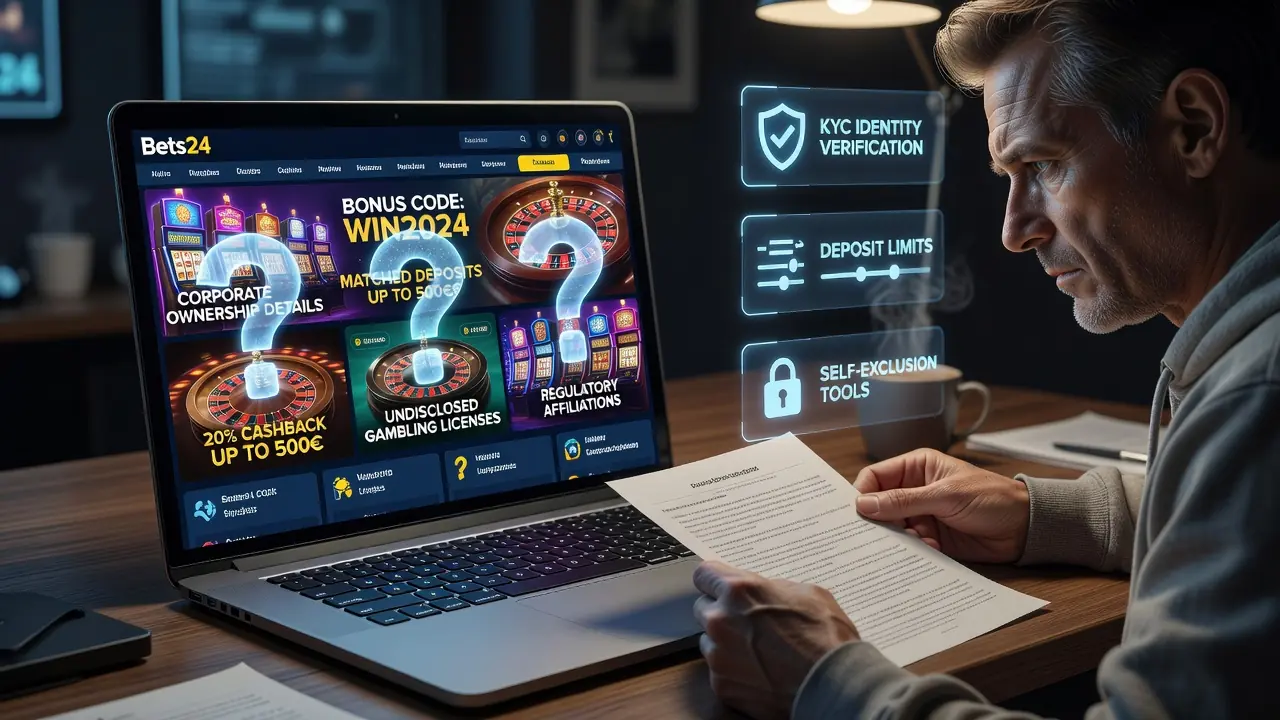
A newly launched online casino, Bets24, has entered a crowded market in 2024 without disclosing basic information about who operates it. That gap matters more than it might seem: in an industry where trust is the product, the identity of the company behind a gambling platform is foundational information, not an afterthought.
Why Operator Transparency Matters
Licensing details, corporate ownership, and regulatory affiliation are not bureaucratic trivia. They tell a prospective player who is legally responsible if a dispute arises, which jurisdiction's consumer protection rules apply, and whether an independent authority has reviewed the platform's fairness and financial practices. When a casino omits this information, players lose the ability to verify any of it. This is not necessarily evidence of wrongdoing, but it does shift the burden of due diligence entirely onto the consumer, which is a meaningful risk in an industry built on real-money transactions.
How Bonus Structures Actually Work
Bets24, like most newer operators, builds its player acquisition strategy around promotional incentives rather than brand reputation, since it has none yet. Bonus codes tied to deposits, matched funds, or cashback are standard tools used across the sector to encourage sign-ups and repeat activity. Cashback offers, for instance, typically return a portion of a player's net losses over a session or period, often somewhere in the range of single digits to around 20 percent, though the exact figure and conditions vary by operator and are never guaranteed or standardized. These mechanisms do not change the underlying mathematics of casino games. The house edge remains intact regardless of which promotion a player activates; bonuses simply redistribute some value back to the player under specific conditions, usually wagering requirements that must be read carefully before any offer is used.
What Players Should Verify Before Signing Up
Identity verification, known as KYC (know your customer), is a standard requirement across regulated gambling platforms and typically occurs before a withdrawal is processed. This step exists to prevent fraud and money laundering, and its presence is generally a reassuring sign of compliance infrastructure, even on platforms where other transparency markers are missing. Still, KYC alone does not substitute for knowing who owns and licenses the business holding a player's funds. Anyone considering an unfamiliar operator should look for:
- A clearly stated gambling license and issuing regulator
- Named corporate ownership or operating company
- Transparent terms attached to any bonus, including wagering requirements and expiry
- Accessible responsible-gambling tools, such as deposit limits and self-exclusion options
The Broader Market Pattern
Bets24's situation reflects a recurring pattern among newly launched online casinos: aggressive promotional positioning paired with minimal corporate disclosure. This approach lowers the barrier to entry for operators but raises the diligence burden for everyone else. Regulators in established markets have increasingly scrutinized this exact combination, pushing for clearer licensing disclosures and more honest bonus advertising. Until a platform demonstrates that kind of transparency, the safest posture for any consumer is skepticism paired with careful reading of the fine print, not enthusiasm for the headline offer.