
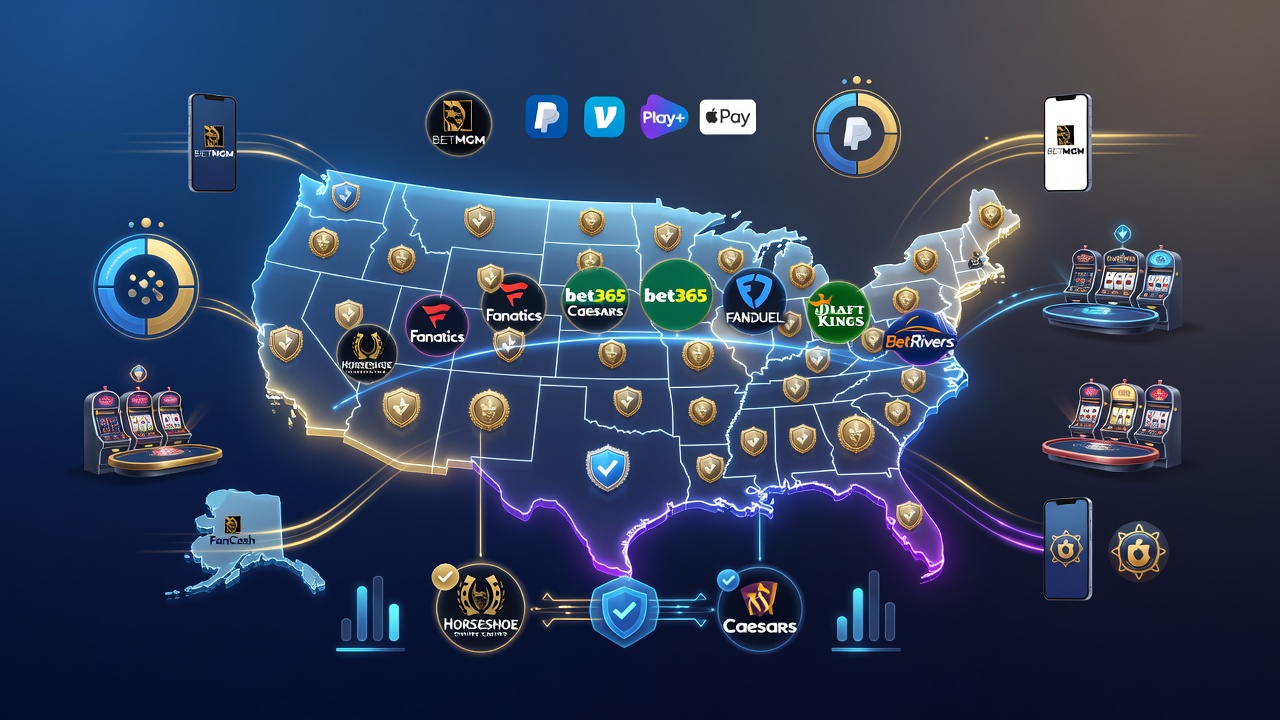
The regulated online casino market in the United States has reached a point where competition, not scarcity, defines the consumer experience. A cluster of operators - BetMGM, Fanatics, bet365, Caesars, Horseshoe, FanDuel, DraftKings and BetRivers - now compete across a patchwork of states that permit real-money online gambling, each trying to differentiate through game libraries, payout speed and loyalty structures rather than novelty alone. For players, that competition has translated into more choice, but it also raises the stakes for understanding what separates a legitimate, well-regulated platform from a riskier alternative.
Why Licensing Still Determines the Field
Real-money online casino gambling remains legal only in a limited number of states, which is why many American players instead encounter social or sweepstakes casinos - platforms that operate under a different legal framework and do not offer the same consumer protections as licensed real-money sites. In states where regulated gambling is live, operators must meet state-level requirements covering game fairness, data security and responsible-gambling tools. That licensing structure is the primary reason operators like Caesars, BetMGM and bet365 can offer verifiable payout speeds and dispute-resolution channels that unregulated platforms cannot guarantee. For consumers, checking whether an operator holds an active license in their state is a more reliable safety signal than any marketing claim.
How Welcome Offers Actually Work
Bonus structures vary widely, and the differences matter more than headline numbers suggest. BetMGM's offer, for instance, pairs daily bonus spins with a deposit-match wheel spread across a player's first several deposits, while Fanatics ties its promotion to a FanCash rewards system that converts play into bonus bets and merchandise. Caesars and bet365 lean on more traditional deposit-match structures with defined wagering requirements - Caesars requires 15x on slots and up to 75x on other games, while bet365 sets a 30x requirement on its deposit match but only 1x on bonus spins. These figures are not interchangeable, and a lower headline bonus with lighter wagering terms can be worth more in practice than a larger one with steep playthrough conditions. No bonus structure changes the underlying math of the games themselves; wagering requirements exist precisely because the house edge remains constant regardless of promotional credit.
Payment Speed as a Competitive Signal
Withdrawal timing has become one of the clearer ways operators distinguish themselves. BetMGM and Fanatics both emphasize same-day payouts through methods like PayPal, Venmo and Play+, while bet365 highlights near-instant Apple Pay withdrawals and Caesars processes requests around the clock. These timelines depend heavily on the payment method chosen and the operator's internal verification process, not just marketing promises. Faster, transparent withdrawals are generally a reasonable proxy for operational maturity, since slow or opaque payout practices have historically been a warning sign in less regulated corners of the industry.
What Shared Platforms Mean for Players
Some apparent competitors are less distinct than their branding suggests. Horseshoe Casino runs on the same technical platform as Caesars Palace Online Casino, sharing game libraries and live-dealer studios while operating under a separate loyalty identity. This kind of platform-sharing is common in the industry and allows operators to extend market reach without duplicating infrastructure, but it also means players comparing "different" casinos should check whether they are evaluating genuinely separate products or variations on the same backend. Understanding this structure helps consumers make more informed decisions about where multiple sign-ups actually add variety versus where they merely duplicate the same game catalog under a different name.