
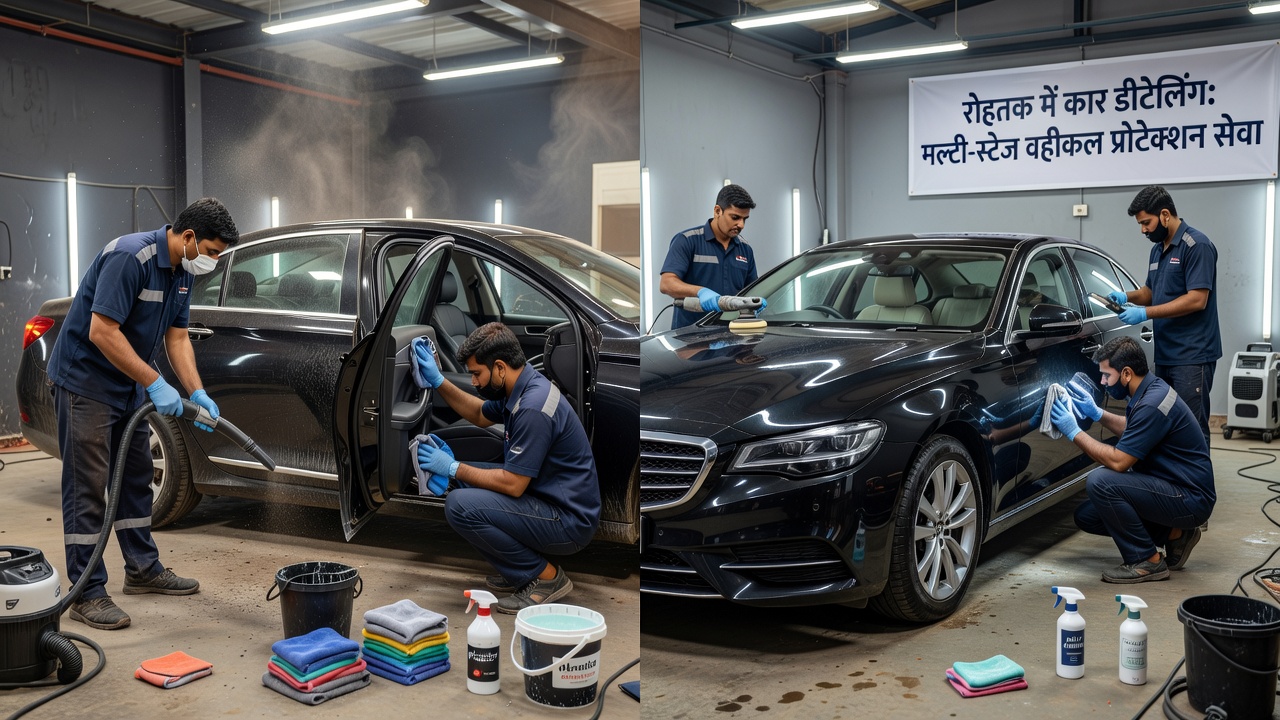
A car wash and a car detailing job are not the same service, even though many vehicle owners still use the terms interchangeably. Detailing is a structured, multi-stage process aimed at cleaning, restoring and protecting a vehicle, and in Rohtak it has grown into a distinct segment of the automotive services market rather than an add-on offered at a fuel station or wash centre.
What Separates Detailing From a Standard Wash
A standard wash removes surface dirt. Detailing goes further, working through three or four distinct stages that address the car at a material level. The first is cleaning - washing, vacuuming, wiping and degreasing every accessible surface, inside and out. The second is restoration, where polishing, buffing, waxing and paint correction address minor scratches, oxidation and dullness that accumulate over months of regular driving. The third is protection, where a coating or film is applied to slow down future wear rather than simply correcting existing damage. Each stage depends on the one before it; skipping cleaning or restoration reduces how well a protective layer performs later.
Why Protective Coatings and Films Matter
Paint protection film works as a physical barrier against stone chips, minor abrasions and general road wear, which matters in a city where vehicles are regularly exposed to dust, heat and uneven road surfaces. Ceramic coating operates differently. It is a liquid polymer applied over the paint that bonds at a chemical level, combining a physical protective layer with a glossy finish. The durability and performance of ceramic coatings vary depending on their composition, so the protection offered is not uniform across products marketed under the same name.
Window glass films serve a separate but related purpose. Beyond appearance, their main function is heat and UV rejection, which affects cabin temperature and, over time, the condition of upholstery and dashboard materials exposed to direct sunlight.
What Vehicle Owners Should Weigh Before Choosing a Service
Detailing outcomes depend heavily on the quality of materials used and the skill applied during restoration, two variables that are not always visible to a customer at the time of booking. A few practical considerations help set realistic expectations:
- Paint correction can reduce but not always eliminate deeper scratches or existing damage.
- Ceramic coatings differ in composition and longevity; higher cost does not automatically guarantee superior performance.
- Protective films reduce the risk of damage but do not make a vehicle immune to impact or weathering.
- Regular maintenance after detailing affects how long the results last.
As detailing services expand across Rohtak, the value for consumers lies less in marketing claims and more in understanding what each stage of the process actually does. A car that has been properly cleaned, restored and protected holds its appearance and resale value better over time, but the outcome still depends on the materials used, the conditions the vehicle faces afterward, and how realistically expectations are set at the outset.